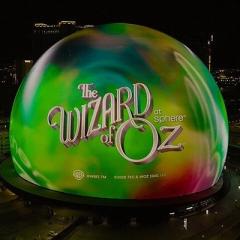
Sphere Las Vegas: What to See, Where to Buy Tickets, and Which Seats to Choose

Travel Analysts

Sphere impresses from outside, but your experience — and your money — ride on two choices: which event you see and where you sit. The center of the 200 and 300 levels (sections like 206 and 306) is the consensus sweet spot, balancing stage and full-screen views. The 400 level is the cheapest with a complete dome view, ideal for immersive films but steep. Avoid the back rows of the 100 level, where an overhang cuts off the upper screen. Pick the event first, then the right section for it.
Explore the full guide & expert tips ➜Is Sphere Worth It for Your Trip?
Sphere is the giant LED dome that dominates the skyline behind The Venetian — a venue built for immersive films and concerts, wrapped in a screen that covers the interior from floor to ceiling. From outside, the exterior display alone is a spectacle, and plenty of travelers are happy to photograph it for free and spend their ticket money elsewhere.
Whether it's worth going inside depends on what you want. If you're on a tight budget, the exterior plus the atmosphere around it may be enough. If you're drawn to cutting-edge visual experiences, or there's a concert by an artist you love during your dates, the inside is what justifies the hype — and many visitors call it the high point of their trip. The thing that separates "worth every dollar" from "we overpaid" isn't usually the price. It's whether you chose the right event and the right seat for it.
The trade-off: Going inside costs real money on top of everything else in Vegas. You get an experience genuinely unlike any other venue — but only if the event matches your taste, so the smart move is choosing deliberately rather than paying just to say you were inside.
What You Can See at Sphere Right Now
Sphere programming falls into a few types, and the lineup changes, so always check what's on during your travel dates. Immersive films — "The Sphere Experience," with productions like Postcard from Earth and an immersive Wizard of Oz — are purpose-built to show off the dome and run a bit over an hour with no break. They're the most affordable way to experience Sphere and the easiest to fit into a trip, since they run multiple times a day.
Concert residencies bring a specific artist for a multi-week run, with major acts rotating through. These sell out fast and price higher, especially for big names. There are also occasional special events. The practical takeaway: decide whether you want the immersive-film experience (flexible, cheaper, daytime options) or a concert (event-driven, pricier, date-dependent), because they lead to different seating choices.
The trade-off: An immersive film is shorter and cheaper but is about the technology, not a live performer. A concert is a bigger event and a bigger spend tied to specific dates. You pick based on what you want from the night — and on what's actually playing when you're in town.
Seating Sections Explained: 100, 200, 300, 400, and the Floor
Sphere seats around 17,600 (up to roughly 18,600 depending on configuration) across four levels — 100, 200, 300, and 400 — plus a general-admission floor for some concerts. Because the screen wraps the entire interior, no seat stares at a blank wall; what changes is your distance from the stage and your angle on the screen. Around 10,000 seats are "haptic," meaning they physically rumble in sync with the content, and they're spread throughout the venue rather than reserved for premium areas.
Here's how the levels break down. The 100 level is closest to the stage — great for concerts in the front rows, but be careful: from roughly row 24 back, the overhang of the 200 level above cuts off the top of the screen, which matters enormously in a venue built around a wraparound image. The 200 and 300 levels are the consensus sweet spot, elevated enough to take in the full screen while keeping a clean line to the stage; the center sections (those ending in 5, 6, or 7 — especially 206 and 306) are the gold standard, with 306 sitting at the screen's mathematical center. The 400 level is the cheapest, with a complete panoramic view of the dome — excellent value, particularly for immersive films — but it's steeply inclined and can feel intense if you're afraid of heights.
Sphere Seating Guide by Level
| Level | What You Get | Best For | Price Tier | Watch For |
|---|---|---|---|---|
| Floor / GA (concerts) | Closest to the stage, maximum energy | Concerts where proximity matters | $$$–$$$$ | Less full-dome perspective; standing |
| 100 level | Close to the stage | Concerts (front rows ~12–23) | $$$ | Rows ~24+ hit the 200-level overhang — screen cut off |
| 200 level (center: 206) | Balanced stage + full-screen view | Both concerts and films — the sweet spot | $$$ | Center sections (5/6/7) are best; sides less ideal |
| 300 level (center: 306) | Full wraparound view; 306 = screen's center | Immersive films (gold standard) + concerts | $$–$$$ | Aim center; 306 is the "Director's Seat" |
| 400 level | Complete panoramic dome view, cheapest seats | Immersive films on a budget | $–$$ | Steep incline — skip if you fear heights |
The trade-off: Premium center seats in the 200s and 300s cost more than the upper 400s or the obstructed back-100s. You get the balanced, full-immersion view the venue was designed around — but for immersive films specifically, a cheap 400-level seat delivers most of that wraparound effect for far less.
Concerts vs Immersive Films: Where to Sit Changes
The single most useful thing to understand is that the best seat depends on what you're seeing, because concerts and immersive films have opposite priorities.
For a concert, proximity to the stage matters — you want to feel the performance. That favors the floor (general admission, where offered), the 100 level front rows, and the lower 200s, with the 300 level as a strong medium. For an immersive film, the screen is the show, so elevation and distance win — you want to take in the entire dome at once. That flips the logic toward the 300 and 400 levels, with center 306 as the ideal, and makes the cheap upper sections genuinely excellent rather than a compromise.
In other words: don't buy a "best seats" recommendation without knowing whether it was written for a concert or a film. The front-row energy that makes a concert unforgettable is exactly the position that, for an immersive film, leaves you craning to see the top of the screen.
The trade-off: Optimizing for one event type means the seat isn't ideal for the other. You get the right perspective for what you're actually attending — front-and-close for a concert, elevated-and-centered for a film — instead of a generic "good seat" that fits neither.
Where to Buy and What It Costs
Prices at Sphere swing widely by event and demand: immersive films in the upper sections are the most affordable entry point, center 200/300 seats command a premium, and big-name concerts price highest of all, especially on the floor. Rather than chase a fixed number, decide which tier fits your trip — a budget 400-level film seat, a mid-range center-300 seat, or a premium concert ticket — and shop within it.
Buy from the official venue or show site, or from reputable booking platforms and partners that show you a clear, interactive seat map before you pay. Always check three things: the all-in price including fees, the exact section and row on the map (so you dodge the 100-level overhang), and the cancellation policy. For concerts and peak dates, book early — the best seats and showtimes go first. Steer clear of opaque resellers; a slightly lower headline price isn't worth losing the ability to see exactly where you'll be sitting.
The trade-off: Buying early through a reputable seller with a clear seat map sometimes costs a bit more than a last-minute gamble. You get to verify your exact seat and avoid the obstructed sections — which, in a venue this dependent on sightlines, is worth far more than a small saving.
Getting There, Timing, and What to Expect Inside
Sphere sits just behind The Venetian, with pedestrian access and rideshare drop-offs nearby. Its own parking fills up fast and runs pricey, so many visitors take a rideshare or park at a neighboring resort and walk over — budget 15 to 20 minutes for that walk. Entry is primarily by mobile ticket, so have your phone ready.
Arrive early — at least 30 to 45 minutes before showtime. That's partly for security, but mostly because the atrium and pre-show atmosphere are part of the experience, and the warm-up sequences inside are worth catching rather than rushing past. Immersive films run a bit over an hour with no intermission, so use the restroom before you go in; there's no graceful moment to slip out once it starts. Food and drinks inside are stadium-priced, so if your budget is tight, eat beforehand. Get there with margin, take in the building, and you'll get far more out of the visit than someone who sprints in at the last second.
The trade-off: Arriving 30–45 minutes early and sorting out parking or a rideshare costs you time and a little planning. You get the full experience — atrium, pre-show, and a relaxed start — instead of a stressed dash that skips the parts of the visit that are included in your ticket.
Common questions
❓ Is Sphere in Las Vegas worth it?
It depends on what you want. The exterior is a free spectacle worth seeing regardless. Going inside is worth it if you're drawn to immersive visual experiences or there's a concert by an artist you love during your visit — many call it their trip highlight. On a tight budget, viewing from outside and spending the ticket money elsewhere is a legitimate choice. The key to a good experience isn't the price; it's matching the right event with the right seat.
❓ What can you see at the Sphere in Las Vegas?
Two main things, plus occasional special events. Immersive films ("The Sphere Experience" — productions like Postcard from Earth and an immersive Wizard of Oz) run multiple times a day, last a bit over an hour, and are the cheapest, most flexible option. Concert residencies bring a specific artist for a multi-week run; they're pricier and date-dependent, and big names sell out fast. The lineup rotates, so check what's playing during your travel dates before planning around it.
❓ What are the best seats at Sphere Las Vegas?
The consensus best seats are the center sections of the 200 and 300 levels — especially 206 and 306 — which balance the stage view with the full wraparound screen. Section 306 sits at the screen's mathematical center (the "Director's Seat") and is the top pick for immersive films. The 400 level is the cheapest and gives a complete dome view (great value for films), but it's steep. Avoid the back rows of the 100 level (roughly row 24+), where the overhang blocks the upper screen.
About the Author
Intercoper Curator Team
Travel Analysts
Our team researches and curates tour experiences. We combine local knowledge with rigorous verification to recommend only tours worth your time.