Valley of Fire From Las Vegas: Nevada's Most Spectacular Day Trip (and How to Do It)

Travel Analysts

Valley of Fire is the most spectacular day trip from Las Vegas — Nevada's oldest state park, about 50 miles northeast (an hour's drive), full of otherworldly red sandstone, petroglyphs, and hikes like the Fire Wave. Unlike Red Rock Canyon, there's no timed-entry reservation — you pay around $15 per vehicle at the gate. You'll want a rental car or guided tour, since it's too far for a rideshare back. Budget at least a half day, and go in spring, fall, or early morning to dodge the heat.
Explore the full guide & expert tips ➜What Valley of Fire Is — and the Decisions You're Making
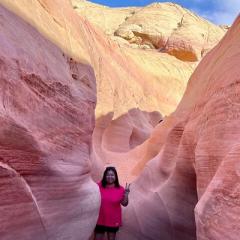
Valley of Fire is the day trip that makes people forget they're near Las Vegas. Nevada's oldest state park, about 50 miles northeast of the Strip and roughly an hour's drive, it's a landscape of 150-million-year-old red Aztec sandstone — swirling, fiery rock formations that rival Utah's famous national parks, plus ancient petroglyphs, slot canyons, and arches. For sheer visual drama, it's the most spectacular of the easy day trips from Vegas, and a favorite of photographers.
A few decisions shape how you visit. The first is how to get there — rental car or guided tour — because, unlike Red Rock, it's too far to count on a rideshare for the return. The second is which day trip to choose if you only have time for one, since Valley of Fire, Red Rock, and Hoover Dam each offer something different. The good news: there's no timed-entry reservation system here (a relief if you've dealt with Red Rock's), so entry itself is simple. This guide walks all of it.
Valley of Fire vs Red Rock Canyon: Which to Choose
If you've only got one day for nature, this is the choice most Vegas visitors weigh — and the key fact is that you can't do both well in a single day. Valley of Fire sits about 50 miles northeast of the Strip; Red Rock is 17 miles west. They're in opposite directions, roughly 90 minutes apart, so trying to combine them turns a great day into a driving marathon. Pick one.
The short version: Red Rock is closer, cheaper to reach, and great for a quick half-day escape, easy hikes, and world-class rock climbing — but it has a timed-entry reservation system from October through May. Valley of Fire is farther and a bigger commitment, but the scenery is more dramatic and varied — fiery sandstone, petroglyphs, slot canyons — and there's no reservation to book. If you want the easiest, closest taste of the desert, choose Red Rock; if you want the most jaw-dropping, photogenic landscape and don't mind the longer drive, choose Valley of Fire.
Which Day Trip to Choose
| Valley of Fire | Red Rock Canyon | Hoover Dam | |
|---|---|---|---|
| Distance from Strip | ~50 mi NE (~1 hour) | ~17 mi W (~30 min) | ~35–45 min SE |
| The draw | Dramatic red sandstone, petroglyphs, photography | Easy desert escape, hikes, climbing | Engineering marvel, history |
| Reservation needed? | No — pay at the gate | Yes — timed entry Oct–May | No |
| Time needed | Half to full day | Half day | Half day |
| Best for | Most spectacular scenery; photographers | Closest, quickest nature fix | History and engineering fans |
The trade-off: Choosing Valley of Fire over Red Rock means a longer drive (an hour vs about 30 minutes) and a bigger chunk of your day. You get more dramatic, varied scenery and no timed-entry hassle — Red Rock is the quicker, closer option, but the landscape is less spectacular.
Self-Drive vs Guided Tour
Getting to Valley of Fire really comes down to a car or a tour — and unlike closer spots, you can't lean on a rideshare. Self-driving gives you the most flexibility and the lowest cost: rent a car, pay the entrance fee, and explore on your own schedule, which is ideal for photographers who want to chase the light at their own pace. The catches are that you need a vehicle, the drive is about an hour each way, and there's no reliable cell service in the park, so download maps ahead and don't expect to summon a ride back.
A guided tour removes those frictions. Tours include hotel pickup and return, comfortable air-conditioned vans, and a guide — often a trained photographer who knows the best stops, angles, and light — and they roll the entrance fees into the price. Some combine Valley of Fire with another sight. The trade-off is the usual fixed schedule and less freedom to linger at a spot you love. If you have a rental car and want full control, self-drive; if you don't want to drive an hour each way, want the logistics and fees handled, or value a photographer-guide, a tour is the better fit.
The trade-off: A guided tour costs more than self-driving and follows a set itinerary. You get door-to-door transport, no hour-long drive to manage, entrance fees included, and expert (often photography-focused) guidance — without needing a rental car or worrying about the no-cell-service return.
What to See: The Park's Highlights
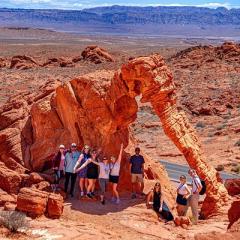
Valley of Fire packs a lot into a compact area, and one main road (the Valley of Fire Scenic Byway, including the stunning Mouse's Tank Road) links most of it. The undisputed star is the Fire Wave — a swirling formation of red and white sandstone that looks like a frozen wave or scoops of ice cream, reached by an easy 1.5-mile round-trip hike and one of the most photographed spots in Nevada. Beyond it, Rainbow Vista offers sweeping multicolored views, White Domes combines colorful rock with a slot canyon and old movie-set remnants, and Elephant Rock is a quick, fun formation near the east entrance.
For history, Atlatl Rock showcases ancient petroglyphs, and Mouse's Tank is a short trail past more rock art. The Seven Sisters picnic area is a scenic spot to stop and eat. Even if you only drive the byway and hit the overlooks, the scenery delivers — but the short hikes to Fire Wave and White Domes are where the park's magic really shows.
Valley of Fire Highlights
| Highlight | What It Is | Effort | Don't Miss If… |
|---|---|---|---|
| Fire Wave | Swirled red-and-white sandstone — the park's icon | Easy 1.5-mile round-trip hike | You do nothing else — this is the must-see |
| Rainbow Vista | Sweeping multicolored panorama | Short walk / overlook | You love big views |
| White Domes | Colorful rock, a slot canyon, old movie-set remnants | Moderate loop hike | You want variety in one stop |
| Elephant Rock | Elephant-shaped arch near the east entrance | Quick, easy | You're entering/exiting the east side |
| Atlatl Rock | Ancient petroglyphs on the rock face | Stairs to viewing area | You're into history and rock art |
| Mouse's Tank Road | The park's most scenic stretch of byway | Drive / overlooks | You want the iconic scenic drive |
The trade-off: Trying to see every highlight, hike, and petroglyph site means a rushed day or a very long one. You get the essence of the park from the Fire Wave plus two or three other stops in a half day — going deeper (petroglyphs, longer trails, sunset) is what the six-hour or full-day visit is for.
How Much Time to Budget, and When to Go
Plan at least a half day — realistically four to six hours inside the park to do the highlights justice. Four hours covers Fire Wave, Rainbow Vista, White Domes, and Elephant Rock; six lets you add the petroglyphs at Atlatl Rock and Mouse's Tank without rushing. Many visitors do the main sights in an afternoon and catch sunset before heading back, which is a strong plan given how the rock glows in low light.
Timing matters more here than at most day trips because of the heat. The best months are spring (March–May) and fall (September–November), when temperatures are comfortable. Summer is genuinely dangerous — the sand and rock get scorching, and shade is scarce — so if you must go then, start at dawn and carry far more water than feels necessary. For photography and cooler conditions any time of year, aim for early morning or golden hour, when the deep reds and oranges are at their most intense.
The trade-off: Setting aside a half to full day and timing it for spring, fall, or early morning means more planning than a spontaneous outing. You get comfortable temperatures, the best light, and a safe, unhurried visit — instead of a scorching midday slog through one of the hottest places near Vegas.
Practical Tips for Visiting Valley of Fire
A few essentials make the trip smooth. Entry is simple — there's no timed-entry reservation; you just pay the fee (around $15 per vehicle for out-of-state visitors, less for Nevada plates) at the gate, with self-pay during unstaffed early or late hours. The Visitor Center (open roughly 9 AM to 4 PM) is worth a stop for maps, exhibits, and current trail conditions.
Come prepared for the desert: carry plenty of water — about a gallon per person regardless of season — wear strong sun protection, and bring proper shoes for the short hikes. Because there's no reliable cell service, download offline maps before you arrive and don't depend on your phone for navigation or a ride. The Fire Wave gets crowded and hot midday, so go early if you want clean photos and cooler footing. And if you're driving back toward Vegas, time it so you're not making the hour-long return exhausted after a scorching afternoon.
The trade-off: Packing water, sun protection, and offline maps, and timing your hikes early, takes some forethought. You get a safe, comfortable visit to one of the most beautiful places near Las Vegas — instead of the common mishaps: no water, no signal, no shade, and midday crowds at the Fire Wave.
Distances, park highlights, and the (no-reservation) entry system reflect 2026 operations and are stable, but entrance fees, Visitor Center hours, and tour details can change — confirm current information with Nevada State Parks and any tour operator before visiting. The park is hot and has no reliable cell service; carry ample water and download maps ahead.
Common questions
❓ Is Valley of Fire worth visiting from Las Vegas?
Absolutely — many visitors rate it their trip highlight. It's the most photogenic day trip from Vegas: otherworldly red sandstone rivaling Utah's national parks, just 50 miles (about an hour) northeast, and far less crowded than the Grand Canyon. Highlights like the Fire Wave, Rainbow Vista, and White Domes pack dramatic scenery into a compact, easy-to-navigate park. It's worth it if you love landscapes and photography, and there's no timed-entry reservation to deal with — just pay at the gate.
❓ Valley of Fire or Red Rock Canyon — which is better?
Depends on your priorities, and you can't do both well in one day (they're in opposite directions, ~90 minutes apart). Red Rock is closer (17 miles west), cheaper to reach, great for a quick escape and climbing — but needs a timed-entry reservation October–May. Valley of Fire is farther (50 miles northeast, ~1 hour) and a bigger commitment, but the red-sandstone scenery is more dramatic and there's no reservation. Choose Red Rock for ease and proximity; Valley of Fire for the most spectacular landscape.
❓ Do you need a car to visit Valley of Fire from Las Vegas?
Essentially yes — a rental car or a guided tour. It's about 50 miles (an hour) northeast of the Strip, too far to rely on a rideshare for the return, and there's no reliable cell service in the park to call one. Self-driving is the cheapest and most flexible option if you have a car. If you don't, a guided tour from Las Vegas includes hotel pickup, transport, entrance fees, and a guide — the easiest way to visit without renting a vehicle.
About the Author
Intercoper Curator Team
Travel Analysts
Our team researches and curates tour experiences. We combine local knowledge with rigorous verification to recommend only tours worth your time.