Death Valley From Las Vegas: Day Trip, Heat and What It Costs

Travel Analysts

Death Valley National Park is about a two-and-a-half-hour drive from Las Vegas to the Furnace Creek Visitor Center, in California but on the same Pacific clock. Entry is $30 per private vehicle or $15 per person, and unlike Zion and Grand Canyon National Park it adds no surcharge for non-US residents. The season decides the trip: summer can reach 130°F, and the park advises against hiking the low valley when it is hot.
Explore the full guide & expert tips ➜What Death Valley Is, and the Decision You Are Making
Death Valley is the low, hot desert park west of Las Vegas, across the California state line. The National Park Service puts Las Vegas approximately a two-and-a-half-hour drive from the Furnace Creek Visitor Center, the park's main hub.
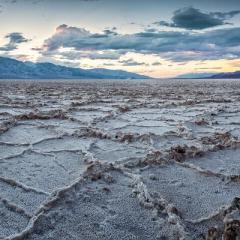
The decision is less about distance than about season. The same day trip that is pleasant in winter or spring is dangerous in the middle of summer, and that changes what you can do once you arrive: in the cooler months you can walk the salt flats and short trails; in the hottest months the trip is mostly viewpoints and short stops.
Unlike Zion, Death Valley does not move you to another time zone. It is in California, on Pacific Time, the same as Las Vegas.
The trade-off: Death Valley is a big day for a few hours of walking around, and the payoff is scenery that does not look like anywhere else near Vegas. If you have one day and it is summer, a closer and shadier trip may serve you better.
Day Tour, Sunset and Stargazing Tour, or Self-Drive
The tours sold from Las Vegas come in a few shapes.
| How you go | Listed length | Best for |
|---|---|---|
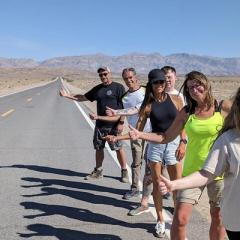
| 🚐 Small-group day trip | about 10 to 12 hours | the main stops in daylight |
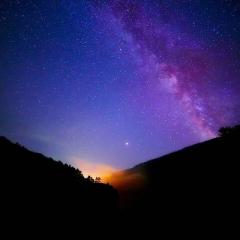
| 🌅 Sunset and stargazing tour | about 11 to 12 hours | evening light, dark skies, less midday heat |
| 🏚️ Day trip with Rhyolite ghost town | about 10 to 11 hours | adding the Nevada ghost town on the way |
| 🚗 Self-drive | your schedule | early starts and staying for sunset |
The sunset and stargazing tours start later and return late at night, which keeps you out of the midday heat and puts you in the park for dark skies. The standard day trips cover more stops in daylight. Some combine the park with the Rhyolite ghost town on the Nevada side.
The trade-off: a later tour trades daytime stops for the cooler evening and the night sky. A daytime tour sees more in good light and spends the hottest hours outside.
What It Costs to Get In, and the Fee It Does Not Charge
As listed by the National Park Service in October 2026:
| Who | Fee |
|---|---|
| 🚗 Private vehicle | $30 |
| 🚶 Per person | $15 |
| 🌍 Non-US residents | same standard fee, no surcharge |
| 🎫 Non-resident annual pass | $250 |
The difference from the other big parks near Las Vegas is the nonresident fee. Zion and Grand Canyon National Park charge non-US residents aged 16 and over an extra $100 per person. Death Valley's fee page states that all visitors, including non-US residents, may buy and use its standard entrance fee, so a visitor from abroad pays the same as anyone else.
The trade-off: for a family visiting from abroad, the entry difference between Death Valley and a national park that charges the nonresident fee can be several hundred dollars. It is not a reason to choose Death Valley on its own, but it belongs in the comparison.
The Heat, and When to Go
Death Valley is the hottest place on Earth, by the park's own description. The National Park Service says summer temperatures can reach 130°F, with nights that stay as warm as 90°F, and the hottest air temperature ever recorded there was 134°F at Furnace Creek in 1913.
The park's safety advice is direct: do not hike in the valley or the lower elevations when it is hot. The mountains are generally cooler in summer.
Winter and spring are the seasons the park describes as very pleasant, and they are when a day trip from Las Vegas works best for walking.
The trade-off: the cool months bring the comfortable walking and the crowds that come with it; summer brings empty viewpoints and conditions where a breakdown or a wrong turn becomes dangerous. Plan the season first and the itinerary second.
Driving Yourself: Fuel, Signal and Help
A rental car works well for Death Valley, with three things to plan for.
Cell phones do not work in most of the park, and there is no service along most park roads. The National Park Service advises that help may be many hours away and that visitors should travel prepared to rescue themselves.
There are three gas stations inside the park: at Furnace Creek, at Stovepipe Wells and at Panamint Springs. The Stovepipe Wells station sells gasoline but not diesel. Fill up before you leave Las Vegas.
Carry more water than you think you need, whatever the season.
The trade-off: driving yourself lets you start before the heat and stay for sunset, and it puts the planning on you. A tour carries the water, the fuel and the route, and fixes your timing in exchange.
Common questions
❓ How far is Death Valley from Las Vegas?
The National Park Service puts Las Vegas approximately a two-and-a-half-hour drive from the Furnace Creek Visitor Center.
❓ Can you do Death Valley as a day trip from Las Vegas?
Yes. Day tours from Las Vegas are listed at around 7 to 12 hours, including sunset and stargazing versions. In summer, plan for viewpoints rather than hikes in the low valley.
❓ Do international visitors pay extra to enter Death Valley?
No. Death Valley's fee page states that all visitors, including non-US residents, may buy and use the standard entrance fee. Zion and Grand Canyon National Park do charge non-US residents an extra $100 per person.
❓ When is it too hot to visit Death Valley?
Summer temperatures can reach 130°F, and the National Park Service advises against hiking the valley and lower elevations when it is hot. Winter and spring are the most comfortable seasons.
*Fees, safety guidance and tour lengths reflect what the National Park Service and the tour listings published in October 2026, and they change. Confirm current fees, road conditions and the forecast with the National Park Service before you go, and ask any tour operator what is included.*
About the Author
Intercoper Curator Team
Travel Analysts
Our team researches and curates tour experiences. We combine local knowledge with rigorous verification to recommend only tours worth your time.